
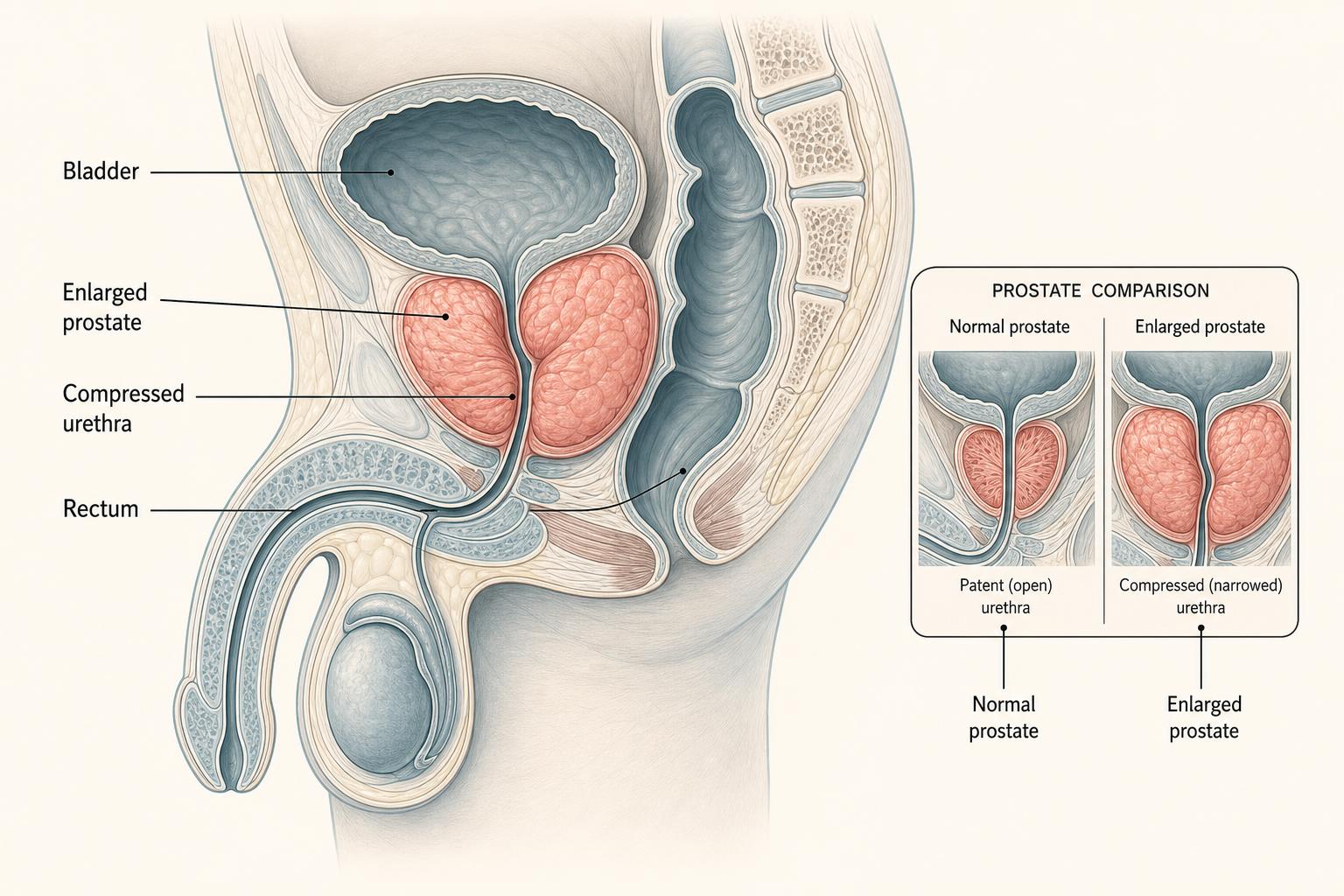
Overview
- BPH causes a weak stream, urgency, frequency, nocturia, and incomplete emptying.
- Untreated BPH can lead to urinary retention, bladder stones, and kidney damage.
- Image-guided options like prostate artery embolization (PAE) treat BPH without cutting prostate tissue.
Symptoms
- Frequent urination, especially overnight (nocturia).
- Weak or interrupted urinary stream, straining to start.
- Sensation of incomplete bladder emptying.
- Sudden urgency, occasional leakage, or urinary retention.
How it is diagnosed
- Symptom score (IPSS) and bladder diary.
- PSA, urinalysis, and post-void residual measurement.
- Uroflowmetry and prostate volume on ultrasound or MRI.
- Cystoscopy when anatomy or stones are a concern.