
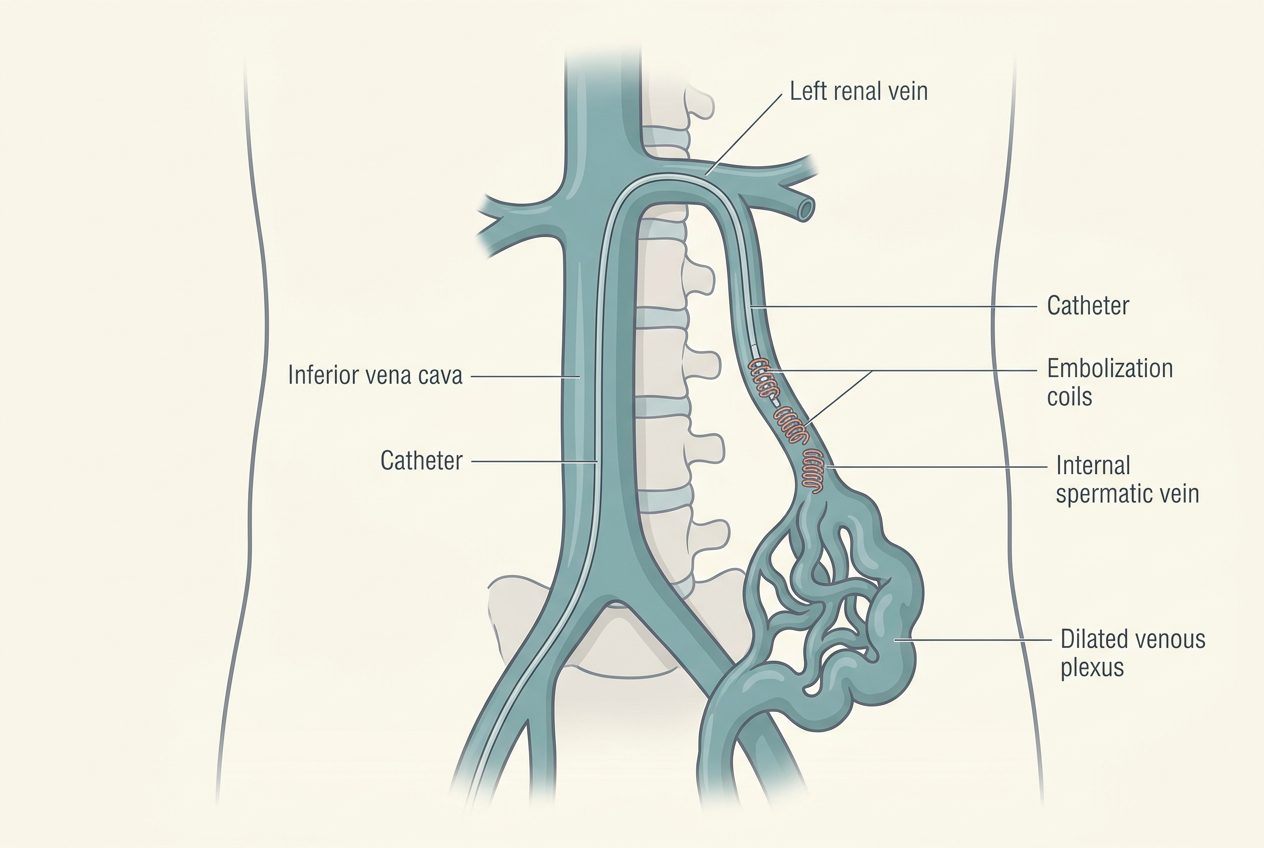
Why varicoceles affect fertility and testicular health
The testicles sit outside the body because sperm production (spermatogenesis) requires a temperature 2–4°C below core body temperature. The pampiniform plexus — a fine network of veins surrounding the testicular artery in the spermatic cord — acts as a heat exchanger, cooling arterial blood before it reaches the testicle. In a varicocele, valves in the internal spermatic vein fail, blood pools and refluxes downward, and the plexus dilates. The heat-exchange mechanism breaks down and intra-testicular temperature rises.
The result is a measurable cascade: heat stress, oxidative damage from reactive oxygen species, sperm DNA fragmentation, impaired Sertoli and Leydig cell function, and over time, testicular volume loss. This is why a varicocele is the single most common correctable cause of male-factor infertility — it is found in roughly 40% of men with primary infertility and 80% of men with secondary infertility. Treating the varicocele removes the reflux, restores normal scrotal temperature, and gives the testicle months to recover. Sperm take about 74 days to mature, so the first meaningful semen analysis after embolization is at 3 months, with continued improvement out to 6–12 months.