
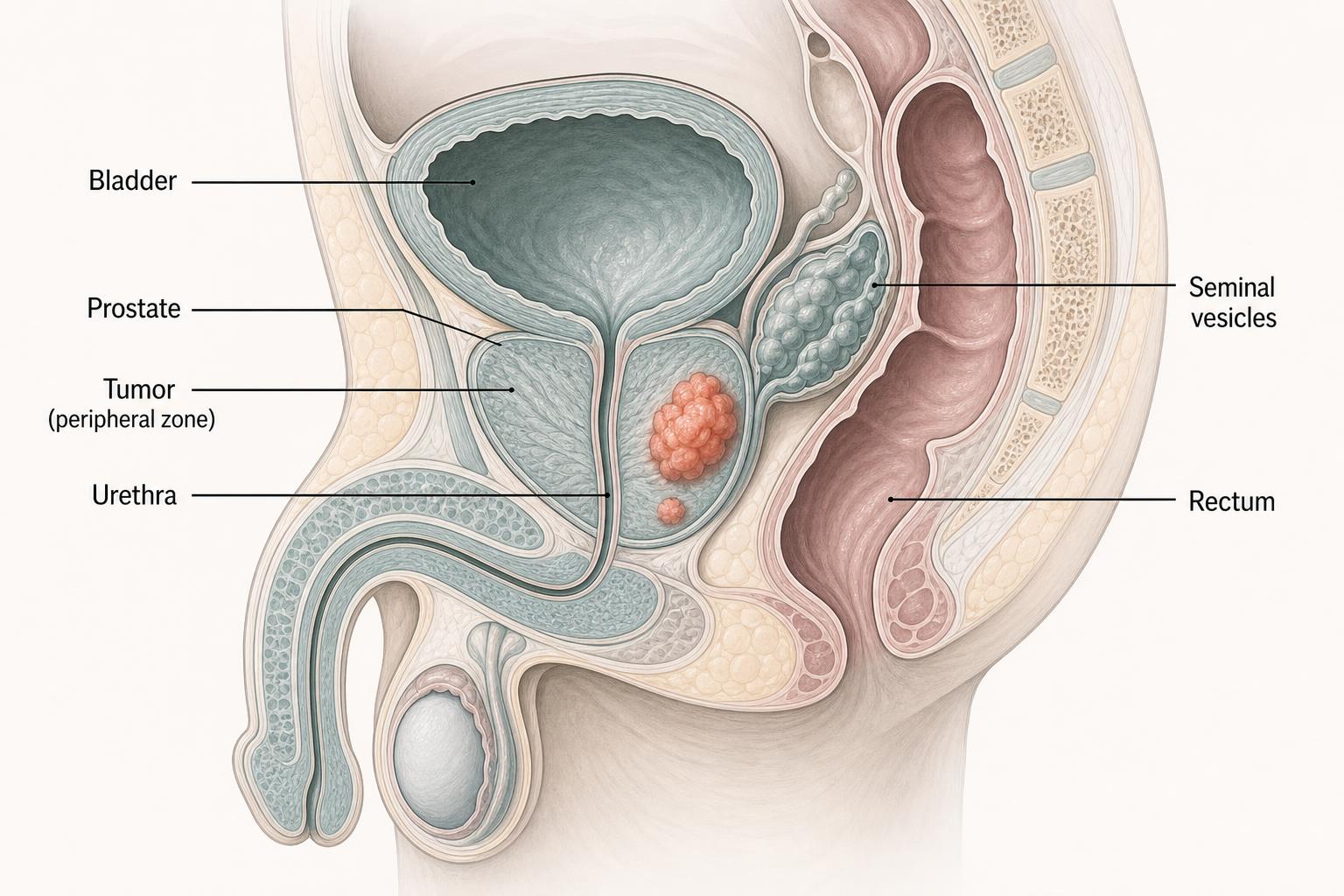
Overview
- An MRI-targeted, image-guided diagnostic pathway reduces unnecessary biopsies and finds clinically significant cancers earlier.
- Many low- and intermediate-risk cancers are now candidates for focal therapy or active surveillance instead of whole-gland treatment.
- Treatment plans balance cancer control with preservation of urinary and sexual function.
Symptoms
- Most early prostate cancers cause no symptoms, detection relies on PSA and imaging.
- Rising PSA over time, or a new abnormal digital rectal exam.
- Less commonly: difficulty urinating, blood in urine or semen, or new bone pain.
How it is diagnosed
- PSA blood test and clinical exam.
- Multiparametric prostate MRI to identify suspicious zones (PI-RADS scoring).
- MRI-fusion targeted biopsy of suspicious areas plus systematic sampling.
- Genomic testing of biopsy tissue when intermediate-risk to guide treatment intensity.